
A silent anxiety attack can be just as intense as a visible panic attack—but without the obvious signs. Many people experience overwhelming fear, physical discomfort, and emotional distress without realizing what’s happening. Because these episodes happen quietly, they are often misunderstood or ignored, even by the person experiencing them.
In this guide, you’ll learn what silent anxiety attacks are, how they differ from traditional panic attacks, their symptoms, causes, and how to manage them effectively.
What Is a Silent Anxiety Attack?

A silent anxiety attack (also known as a silent panic attack) occurs when anxiety symptoms are experienced internally rather than outwardly. There may be no visible panic, hyperventilation, or dramatic behavior—but internally, the nervous system is in full fight-or-flight mode.
- Unlike classic panic attacks, silent anxiety attacks often involve:
- Internal fear without obvious triggers
- Suppressed physical reactions
- Emotional shutdown or mental fog
Because of this, many people suffer silently, assuming their experience is “normal stress” rather than anxiety.
What Are Silent Panic Attacks?
Silent panic attacks are panic episodes that don’t look like panic attacks from the outside. A person may continue working, talking, or sitting calmly while internally experiencing intense distress.
Key Characteristics:
- No screaming, crying, or visible panic
- Symptoms are hidden or controlled
- Often mistaken for physical illness or exhaustion
- This is why silent panic attacks are frequently undiagnosed.
Can You Have a Panic Attack and Not Know It?
Yes — you can have a panic attack and not know it.
Many people experience panic symptoms but:
- Don’t associate them with anxiety
- Believe they are having heart, stomach, or breathing problems
- Normalize anxiety due to long-term stress
If panic attacks occur repeatedly and silently, the body adapts—making them harder to identify.
Silent Anxiety Attacks Symptoms
Silent anxiety attack symptoms vary from person to person, but commonly include mental, emotional, and physical signs.
Physical Symptoms
- Tight chest or shallow breathing
- Racing or irregular heartbeat
- Dizziness or lightheadedness
- Muscle tension (jaw, neck, shoulders)
- Nausea or stomach discomfort
- Fatigue after the episode
Mental & Emotional Symptoms
- Sudden sense of dread or fear
- Feeling disconnected or numb
- Racing thoughts without visible panic
- Fear of losing control internally
- Overthinking or mental paralysis
These silent anxiety attacks symptoms may last minutes or hours and often go unnoticed.
Silent Anxiety vs Silent Panic Attacks
Although similar, there are subtle differences:
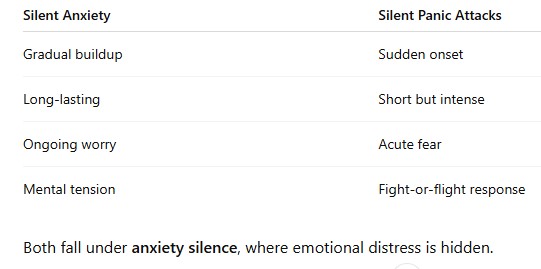
Both fall under anxiety silence, where emotional distress is hidden.
Anxiety Silence: Why People Hide Their Anxiety
Anxiety silence happens when individuals suppress anxiety due to:
- Fear of judgment
- Cultural expectations
- Workplace pressure
- Personal coping habits
People with silent anxiety often appear calm, successful, and in control—while struggling internally.
What Causes Silent Anxiety Attacks?
Common triggers include:
- Chronic stress or burnout
- Unresolved trauma
- Overstimulation (workload, screens, noise)
- Perfectionism
- Social pressure or internalized emotions
Silent anxiety often develops in people who are emotionally self-reliant or used to “pushing through” stress.
How to Recognize Silent Anxiety in Yourself
Ask yourself:
- Do I feel anxious without knowing why?
- Do I feel physically unwell during stress but hide it?
- I Do I suppress emotions to appear calm?
- Do I feel exhausted after social or work situations?
If yes, you may be experiencing silent anxiety attacks.
How to Manage Silent Anxiety Attacks
1. Awareness Comes First
- Recognizing silent anxiety is the first step toward healing.
2. Grounding Techniques
- Slow breathing (4-6 seconds inhale/exhale)
- Cold water on wrists or face
- Naming 5 things you can see
3. Reduce Internal Pressure
- Set realistic expectations
- Take mental breaks
- Practice emotional expression (journaling, talking)
4. Professional Support
- Therapy and anxiety-focused counseling help uncover hidden patterns behind silent anxiety.
When to Seek Help
Seek professional help if:
- Silent anxiety interferes with daily life
- Physical symptoms persist
- Panic episodes increase in frequency
- You feel emotionally numb or detached
Silent anxiety is real—and treatable.
Final Thoughts on Silent Anxiety
A silent anxiety attack doesn’t mean your anxiety is minor—it means it’s hidden. Understanding the signs of silent panic attacks, recognizing anxiety silence, and learning how to manage silent anxiety can make a powerful difference in mental well-being.
You are not weak for feeling this way—and you’re not alone.
Frequently Asked Questions (FAQs)
What is a silent anxiety attack?
A silent anxiety attack is an internal anxiety episode with minimal outward symptoms, often unnoticed by others.
Are silent panic attacks dangerous?
They aren’t life-threatening, but untreated silent panic attacks can impact mental and physical health.
How long do silent anxiety attacks last?
They may last from minutes to several hours, depending on stress levels and coping mechanisms.
Can silent anxiety attacks happen daily?
Yes, especially in people with chronic stress or generalized anxiety.
Is silent anxiety the same as high-functioning anxiety?
They overlap. Silent anxiety is common in people with high-functioning anxiety traits.
Author
A. Davis
Mental Health Writer & Research Contributor
Specializing in anxiety disorders, stress management, and emotional well-being.
Disclaimer
This content is for informational purposes only and does not replace professional medical advice. If symptoms persist, consult a qualified mental health professional.


