

Just imagine: Your newborn baby is crying pitifully when it is feeding time and cannot latch onto the breast, even with all you’re trying to make it do that. It is a very disappointing situation, which could indicate a very frequent problem that has been frequently ignored, lip tie in infants or toddlers. Lip tie is a condition in which the labial frenulum, a narrow band of tissue that joins the gums and the upper lip is either too tight, or thick, and limits the movement of the lips.
Lip tie is not always a problem, but, in some situations, it may complicate breastfeeding. Improper nutrition of babies can take place, and mothers can be unpleasantly affected. Parents who have a newborn or a toddler should learn about lip tie in the infant and toddler age to prevent possible issues that can later crop up in the child eg/ speech disorders or dental problems.
In this informative guide we will learn about what lip tie is, causes of lip tie, symptoms of lip tie, diagnosis of lip tie baby, possible complication of lip tie, treatment of lip tie and some tips on feeding your baby. Authentic sources such as the American Academy of Pediatrics can assist parents analyze whether they have to take any action regarding their small child. Whether it is a fussy feeder, or you merely want to know more, then read on to empower yourself with practical guidance.
What is Lip Tie in Babies and Toddlers?
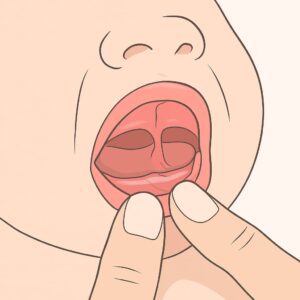
The term lip tie in babies and toddlers describes a condition in which the maxillary labial frenulum (the connective tissue that is soft and binds the upper lip with the upper gum) is excessively tight, too dense or shorter than typical. This limitation can constrain upper lip extending outward, which is crucial in activities such as breast feeding or even smiling on demand. The tongue tie (ankyloglossia) inhibits the motion of the tongue, whereas the lip tie only the lip, but physicians tend to encounter the two problems associated with one another.
All infants are born with a labial frenulum; it is a normal part of anatomy whose role is to stabilize the lips when developing inside the womb. Nonetheless, when it is excessively tight, it produces a lip tie. Lip ties are ranked into four grades of severity by experts:
Level 1 (mild, attaching only to the gum’s surface),
In Level 2 (attaching slightly into the gums),
Level 3 (extending deeper into the gums), and
Level 4 (the most severe, reaching the palate).
These categories assist in the identification of whether the condition affects normal activities.
Example
in mild instances, the frenulum could be thin and elastic, and thus, it may not present any problem. However, in serious cases of lip tie it functions as a tight band that draws down the lip and limits its movements. That difference is a critical point of semantic knowledge: lip tie is not only about the existence of tissue, but that the tissue interferes with the performance of it in the same way that a short labial frenulum may develop as the child matures.
In addition, baby lip tie may be confused with normal labial frenulum. Normal frenulum causes extension of the lips without any tension, . Parents normally observe this during normal check-ups or inspecting the mouth of the baby.
The holistic understanding of this condition relates it to other concepts such as the oral structure and infant development. Its synonyms like upper lip tie or maxillary frenulum restriction reveal that it deals with the upper part of the mouth. Such topic clusters are breastfeeding challenges with it, oral hygiene, and pediatric dental care, which are narrow links to overcome lip tie successfully.
Lip Tie in Babies vs. Labial Frenulum
In simpler words the labial frenulum is there as a natural connection that everyone has and the presence of a infant lip tie occurs when the frenulum is not functioning normally. A normal labial frenulum is a pliable bit that does not interfere with factors such as movement and hence babies are at leeway to latch deeply when feeding. Conversely, a lip tie may also create a tethered range of motion and therefore keep the lip unable to flare out resulting in shallow latches and fatigue in milk transfer.
Research studies also point out that not all aesthetic frenulums are problematic; it is the restriction that counts. When you pull up the upper lip of your baby, you might find a thick piece of tissue towards the low end of the gum. This is referred to as a lip tie, more so when your baby has signs such as difficulty in breastfeeding. Such a comparison highlights the significance of professional evaluation among self-diagnoses.
Causes of Lip Tie in Babies
The specific causes of lip tie among infants are not well understood, although genetics is a major factor. When a parent or sibling has a lip tie or any other oral restriction, the infant will be more likely to become affected by one. According to research, this genetic disorder occurs during the fetal stage as the frenulum does not separate adequately with the lips and the gums.
Possible factors at birth are environmental factors during pregnancy but evidence is limited. As an example, some specialists associate it with dietary deficiencies or exposures, yet no clear evidence has been reported. According to the Cleveland Clinic, lip ties are more prevalent in boys and also frequently accompany tongue ties, which suggests a common developmental pathway.
Moreover, in lip tie baby, lip tie is not the result of an injury or an infection; it is present at birth. Realising these causes allows parents to realise it is not possible to prevent but can be controlled, and in line with other more generalised issues such as hereditary oral situation and prenatal health.
Early Symptoms
The symptoms of the lip tie that appear in toddlers and infants usually concern feeding, yet might spread to some other spheres. In babies the characteristic symptom is that when breast feeding they latch poorly. Babies might have a click sound during feeding, drop the nipple very often or easily become fatigued without giving much milk. This results in long feeding times, frustration on the part of both the parent and the baby, and possible weight gain problems.
Mothers may endure sore, cracked nipples or experience mastitis as a result of poor latch. At the toddler stage, the symptoms change: difficulty in eating solid foods, excessive drooling or front teeth separation. Speech delays may also be possible in case of severely restricted lip movement, e.g. the sound of m or p.
Indicators such as fussiness during feeding, swallowing air leading to gas and reflux are other indicators. According to Healthline, common red flags include difficulty breathing during a feeding and losing the ability to stay awake during a feeding. Not every baby has symptoms, some have done well even with a noticeable connection.
To get a full picture it is necessary to take into consideration such related phrases as “breastfeeding struggles” or “infant oral restrictions” Spotting these signs at an early stage can prevent escalation.
Diagnosis of Lip Tie Babies
The diagnosis of lip tie in an infant consists of a visual and functional examination by a pediatrician, a dentist, or a lactation consultant. They will carefully pull the upper lip to maximize the thickness of the frenulum, location of the insertion, and producibility. A lip tie is probable when it limits the extent to which the lips can be elevated or, when there is a heart-shaped notch.
The kotlow classification system, among other tools, scores severity; experts point out that diagnosis has not been standardized. Observation of feeding is essential- inability of the baby to flange the lip completely gives positive evidence of functional impact.
According to AAP guidelines, parents should consult professionals instead of using photos because overdiagnosis is a concern. Differential diagnosis eliminates other problems such as poor latch technique
Complications and Side Effects
Left untreated, the lip tie may encompass complications, which do not dissolve during an infant age. One of the main risks in babies is ineffective feeding that can lead to poor weight gain and malnutrition. Mothers experience frequent infections, or insufficient milk supply. As toddlers, the side effects include tooth decay due to the presence of food and gum recession, and diastema (gap teeth). Speech disorders or eating selectivity could develop, which lead to nutritional and social growth.
In the long-term, mild mouth breathing may boost oral infections or sleeping problems. Nevertheless, not every case is problematic as some resolve naturally. One of the studies in PMC provides knowledge regarding the improvement in breastfeeding after treatment but there are minimal risks otherwise. Some sources raise the issue of whether lip ties should always be fixed and source evidence-based treatments.
Treatment of Lip Tie Babies and Toddlers
The treatments of lip tie in the babies and toddler depend on the severity. Mild cases usually do not need an intervention and monitoring enough as the child grows.
Most doctors will prescribe non-surgical measures first. A lactation consultant can assist with latch improvement on your baby and mild stretchings can make frenulum more loose. In case these approaches fail, a frenectomy, a fast procedure that cuts the tie with scissors or a laser may be required. This office treatment is normally not anesthetic and the babies can again feed immediately.
Frenectomy Procedure: What to Expect
When a frenectomy is performed, the infant is wrapped to assure safety. When necessary, the provider numbs the area and unties the tie within seconds. Recovery takes minor discomfort, which is treated with pain relievers. Proper healing is achieved through follow-up.
How to Feed a Baby with Lip Tie: Practical Tips
Feeding a baby with lip tie requires strategy. Here are actionable tips:
- Optimize Positioning: Use football or cross-cradle holds for deeper latches.
- Seek Lactation Help: Consultants can teach techniques to compensate for restricted lip movement.
- Supplement if Needed: Pumped milk or bottles ensure nutrition; try paced bottle-feeding.
- Massage and Stretches: Gently rub the gum area pre-feed to relax the tie.
- Monitor Intake: Track wet diapers and weight; consult if gains falter.
WebMD suggests these ease symptoms without surgery. For toddlers, introduce soft foods gradually.
Does Baby Lip Tie Need to Be Corrected?
All lip tie baby do not require correction. The frenulums tend to stretch with time and so watchful waiting is the usual choice when there is no symptom. When the frenulum interferes with feeding, or growth however, treatment is needed. AAP recommends trying non-invasive treatments first.
There are controversies regarding over diagnosis, where procedures have seen an alarming increase in volume without good evidence to support them all. Turn to professionals to be in line with E-E-A-T principles and offer informative and personalized decisions.
Struggling with lip tie?
Find useful tips and professional opinion to make your baby successful despite any lip tie drawbacks. In our most recent posts we address how to recognize symptoms all the way to proper feeding methods and forms of treatment.
Conclusion
In newborns and toddlers, lip tie may be very widespread but is not necessarily a problem, yet when it is, it turns out that knowing the signs such as difficulty latching and seeking interventions, such as frenectomy, may be a game-changer. We have discussed the most important causes of them-generally genetic, but there also seem to be such families, so-called goat families, where there is a risk of feeding failure as a possible cause, or illnesses of improper feeding techniques, or dental disorders. We also gave the real-world tips on how to succeed in feeding.
Bear in mind that not every tie needs to be intervened; most of them disappear by themselves as the baby grows out of the mild ones. Fully supported by well-established sources, such as Mayo Clinic and Healthline, This guide emphasizes the criticality of evidence-based care as awareness increases, and a risk of over diagnosing is a possibility. If they exhibit signs do not wait, seek advice from a pediatrician or lactation consultant immediately.
Frequently Asked Questions
Does a baby lip tie need to be corrected?
Not always, only when symptomatic such as feeding problems or inability to gain weight. Moderate cases generally are resolved spontaneously.
Is a lip tie normal in babies?
Almost all babies are born with a labial frenulum; this turns into a tie when it becomes restrictive. And the majority are normal and do not create problems.
How do I know if my baby needs a lip tie release?
Look for feeding struggles, poor latch, low weight gain, or clicking sounds. Consult a professional for assessment.
How do you treat a baby’s lip tie?
Non-surgical: lactation support, changing position. Surgical: frenectomy using scissors (or laser) when severe.
Is a lip tie release painful for babies?
Little discomfort: easy process that may take a short period, and sometimes no anesthesia is required. The healing is rapid.
Can lip tie cause speech delay?
Possibly, limits the movement of the lips to productions such as p, b and m. Not every case alters speech; treatment is useful.
What sounds does a lip-tie effect?
Lip closure needs: p, b, m, f, v, w. May cause unclear articulation or delays.
What happens if a lip tie is not treated?
Poor feeding, weight problems, tooth decay, gaps in teeth, speaking problems, problems, eating.
Does lip tie affect appearance?
Yes, may result in gaps between front teeth or a different smile. It can be solved with tooth growth.


