
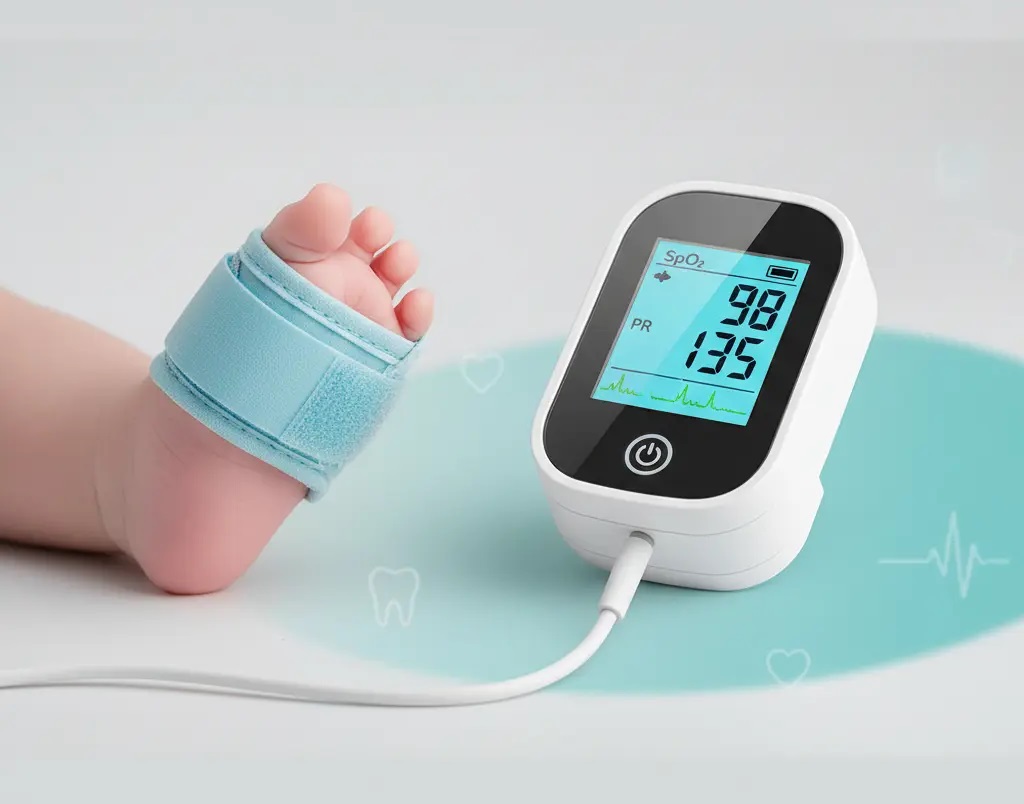
Monitoring a baby’s health can feel overwhelming, especially during the newborn stage. One of the most common concerns parents have is whether their baby is getting enough oxygen. Questions about newborn oxygen levels, normal SpO2 and for newborns, and the use of a Infant pulse oximeter are becoming increasingly common as at-home health devices grow in popularity.
This in-depth guide explains everything parents and caregivers need to know — from understanding normal children’s pulse oximeter for newborns to identifying low blood oxygen levels in newborns, when to worry, and how pulse oximeters can help.
What Is an Infant Pulse Oximeter?
An infant pulse oximeter is a small device designed to measure the oxygen saturation (SpO2) in a baby’s blood and the heart rate. Unlike adults, newborns cannot communicate discomfort easily, making such devices essential for early detection of oxygen deficiencies.
How Does It Work?
The device uses a sensor usually placed on a baby’s finger, toe, or wrist. It emits light waves that pass through the skin, measuring the percentage of oxygen in the blood. This reading helps in identifying low blood oxygen levels in newborns early and allows timely medical intervention.
Why Monitoring Newborn Oxygen Levels Is Important
Maintaining optimal newborn oxygen levels is critical for healthy growth and brain development. Low oxygen levels can lead to complications such as:
- Respiratory distress
- Cyanosis (bluish skin)
- Fatigue and feeding problems
- Heart complications
Signs of Low Blood Oxygen Levels in Newborns
Parents should watch for these signs:
- Rapid breathing or pauses in breathing
- Bluish color in lips, fingers, or toes
- Poor feeding or lethargy
Early detection using a children’s pulse oximeter can prevent serious complications.
Understanding Normal Pulse Ox for Newborns
A crucial aspect of using an infant pulse oximeter is knowing what readings are considered normal.
Normal SpO2 for Newborns
- Normal SpO2 for newborns: 95% to 100%
- Readings consistently below 90% may indicate low blood oxygen levels in newborns and require medical attention.
It’s important to note that slight fluctuations can occur naturally, especially during sleep or crying.
How to Use an Infant Pulse Oximeter Correctly
Using a device correctly ensures accurate readings. Follow these steps:
- Clean the device and sensor before use.
- Place the sensor on the baby’s finger, toe, or wrist.
- Ensure proper positioning to avoid false readings.
- Wait for a stable reading, usually a few seconds.
- Record results and monitor trends over time.
Tips for Accurate Readings
- Keep the baby calm during measurement
- Avoid moving the sensor while reading
- Choose a pulse oximeter specifically designed for infants rather than using an adult version
Children’s Pulse Oximeter vs. Infant Pulse Oximeter
While both devices measure oxygen levels, a children’s pulse oximeter is usually designed for toddlers and older children. Key differences:
- Sensor size: Infant sensors are smaller and more sensitive
- Display: Infant devices often show heart rate and oxygen trends
- Accuracy: Infant pulse oximeters provide precise readings for tiny fingers and toes
For newborns, always choose an infant pulse oximeter to ensure reliable readings.
Top 10 Recommended Infant Pulse Oximeter
Here is a curated list of the Top 10 Infant pulse oximeter in 2026, rated for accuracy, usability, and safety:
- Masimo MightySat – Known for high accuracy and reliable results.
- Beurer PO 60 – Compact and user-friendly, ideal for home use.
- Contec CMS50D1 – Affordable with clear readings.
- Wellue O2Ring – Continuous monitoring with mobile app support.
- ChoiceMMed MD300C – Trusted for hospitals and home monitoring.
- iChoiceBaby Pulse Oximeter – Lightweight and portable.
- Fingertip Pulse Oximeter for Infants – Quick readings, compact size.
- Nellcor OxiMax N-600x – Clinical-grade, used in NICU.
- Innovo Deluxe Fingertip – Durable, easy-to-read display.
- Beurer PO 30 – Simple, reliable, and budget-friendly.
Always consult a pediatrician before purchasing, especially if your newborn has any health conditions.
Factors to Consider Before Buying an Infant Pulse Oximeter
- Accuracy: Ensure the device is clinically validated for infants.
- Ease of use: Should be simple to attach and read.
- Alarm features: Some devices alert if oxygen levels drop dangerously.
- Battery life: Longer battery life is helpful for frequent monitoring.
- Portability: Lightweight and travel-friendly options are ideal for parents on the go.
Conclusion
Monitoring your baby’s oxygen levels is critical, and an infant pulse oximeter is a reliable tool for early detection of issues. By understanding normal pulse ox for newborns, recognizing low blood oxygen levels in newborns, and choosing the right device from the Top 10 Infant pulse oximeter, parents can ensure their child’s health and safety. Always consult healthcare professionals for any concerns and use these devices as a supplemental monitoring tool.
FAQs About Infant Pulse Oximeter
1. What is an infant pulse oximeter and why is it important?
An infant pulse oximeter is a small, non-invasive device that measures a newborn’s blood oxygen levels (SpO2) and heart rate. It is important because babies cannot express breathing difficulties, and early detection of low blood oxygen levels in newborns can prevent serious health issues.
2. What are the normal pulse ox levels for a newborn?
The normal SpO2 for newborns ranges from 95% to 100%. Readings below 90% may indicate low blood oxygen levels in newborns and require immediate medical attention.
3. How do I use a children’s pulse oximeter for my baby?
While children’s pulse oximeters are designed for older kids, for newborns, it’s recommended to use an infant pulse oximeter for accurate readings. Place the sensor on the finger, toe, or wrist, ensure the baby is calm, and wait for a stable reading.
4. How often should I check my newborn’s oxygen levels?
Routine checks are not required for healthy newborns. Use an infant pulse oximeter only if your baby shows signs of respiratory distress, has a medical condition, or per pediatrician advice.
5. What are the signs of low blood oxygen levels in newborns?
Common signs include:
- Bluish lips, fingers, or toes
- Rapid or irregular breathing
- Lethargy or poor feeding
Monitoring with an infant pulse oximeter can help detect these issues early.
6. Can I use a regular pulse oximeter for my infant?
No. Regular adult or children’s pulse oximeters may not be accurate for newborns due to smaller finger size and sensitivity. Always use a clinically validated infant pulse oximeter for precise readings.
7. What should I do if my baby’s oxygen levels are low?
If the infant pulse oximeter shows readings below 90%, seek immediate medical attention. Do not attempt home remedies; low oxygen can be life-threatening if untreated.
8. Which are the top infant pulse oximeters available in 2026?
Some of the Top 10 Infant pulse oximeter models include: Masimo MightySat, Beurer PO 60, Contec CMS50D1, Wellue O2Ring, and ChoiceMMed MD300C. These devices are designed for accuracy, safety, and ease of use in newborns.


